A Better Project Management Meeting Agenda Template
A project management meeting agenda template is your secret weapon for productive, focused team discussions. Think of it as a reusable blueprint that lays out the discussion topics, assigns action items, and keeps everyone laser-focused on the project goals. It’s what turns a potentially rambling call into a crisp, effective session.
Why Unstructured Meetings Derail Your Projects
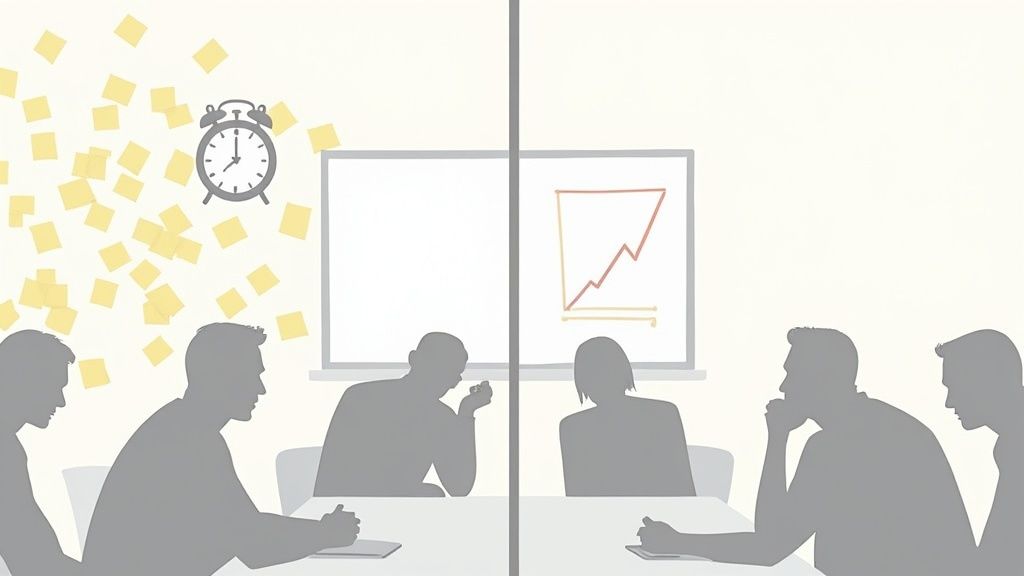
Let’s be honest, we've all been that meeting - the one that starts with no clear purpose and ends an hour later with even less clarity. These unstructured gatherings are more than just an annoyance; they actively sabotage your projects. When you don't have a defined path, discussions drift, key decisions get pushed back, and your team walks away wondering what was actually accomplished.
This aimless approach creates a ripple effect of inefficiency. A simple check-in on a marketing campaign's progress can easily spiral into a debate about the new company logo. Both topics might be important, but the lack of focus means neither gets the thoughtful attention it deserves.
The Real Costs of Meeting Chaos
The damage goes far beyond just wasted time. Unstructured meetings chew through your project's most critical resources: your budget and your team's morale. Every hour spent in a pointless meeting is an hour of salaried time burned with zero return on investment.
When you scale that up, the financial drain is staggering. Ineffective meetings cost businesses in the United States over $37 billion annually. Even worse, 65% of employees say that meetings keep them from completing their own work. If you're interested in the nitty-gritty of this, MyHours.com has some great insights on meeting inefficiency. This problem is only getting worse, which makes having a structured approach non-negotiable.
A meeting without an agenda is like a ship without a rudder. It might move, but it has no direction, and it's almost certain to end up somewhere you didn't intend to go.
Many teams just accept these painful meetings as "part of the job," but they don't have to be. Let's look at how an agenda directly tackles these common frustrations.
Meeting Failures vs Agenda-Driven Solutions
| Common Meeting Problem | How an Agenda Template Solves It |
|---|---|
| Discussions wander off-topic. | Defines specific topics and allocates time, keeping everyone focused. |
| The meeting has no clear goal. | States the meeting's objective right at the top so everyone knows why they are there. |
| Team members arrive unprepared. | Circulating the agenda beforehand gives everyone time to prepare their updates and ideas. |
| No clear next steps are defined. | A dedicated "Action Items" section ensures tasks are assigned with owners and deadlines. |
| Important stakeholders dominate the conversation. | Allocating time to each person or topic gives everyone a chance to contribute. |
The difference is night and day. A simple agenda transforms the entire dynamic.
Turning Confusion Into Actionable Progress
A solid project management meeting agenda template is what turns this chaos into clarity. It’s more than just a document; it's a commitment to respecting everyone's time and contribution. By setting clear expectations before the meeting even starts, you empower your team to show up with solutions, not just problems.
This simple act of preparation builds a culture of accountability. When agenda items have owners and time limits, the team naturally stays on track. Instead of leaving with a vague sense of what’s next, everyone walks away with a concrete list of action items, owners, and due dates. Suddenly, your meetings stop being a source of frustration and become the engine that drives your project forward.
Building the Core of Your Meeting Agenda
A solid project management meeting agenda is more than just a list of things to talk about - it’s your game plan for getting things done. Think of it as a blueprint. Every piece has a purpose, and when they all fit together, you turn a potentially chaotic meeting into a powerhouse of productivity. I’ve seen it time and time again: skipping these core elements is a recipe for meetings that drift aimlessly and end with zero real results.
It all starts with a crystal-clear meeting objective. This isn't the meeting title; it’s a single sentence that gets straight to the point and answers, "Why are we all in this room?" A good objective sets the stage for everything that follows. If a topic doesn't help you hit that objective, it doesn't belong in the meeting. Simple as that.
For example, a vague objective like "Discuss Q3 Launch" invites tangents and confusion. A much stronger one is: "Finalize the marketing budget for the Q3 launch and assign owners to the top three promotional tasks." See the difference? That level of clarity gets everyone on the same page from the get-go. Nailing these objectives is a skill, and you can learn more about how to set SMART goals in our detailed guide.
Defining Roles and Responsibilities
With your objective locked in, the next step is assigning roles to make sure someone is steering the ship. You really only need two to start: a facilitator and a notetaker.
- Facilitator: This person is the meeting's guide. They keep the conversation on track, watch the clock, and make sure everyone sticks to the agenda. They’re the guardian of the meeting's focus.
- Notetaker: This person’s job is crucial. They capture the important stuff - key decisions, lingering questions, and most importantly, who is doing what next (the action items). Great notes kill those "So, what did we decide?" follow-up emails.
When you assign these roles ahead of time, you’re not just delegating tasks; you're giving people ownership over the meeting's success. It flips the switch from a room of passive listeners to a team of active contributors.
Structuring Time and Topics
Alright, you've got your objective and your key players. Now it's time to map out the discussion itself. This is where so many agendas miss the mark. A lazy entry like "Project Updates" is almost useless because it’s way too broad. You need to break it down into specific, actionable topics and give each one a time limit.
It’s actually shocking how few meetings run on a structured agenda. Research shows that as of 2025, only about 37% of meetings globally use one. This directly leads to frustrating outcomes; a nearly identical 37% of meetings end with a clear decision. That means the other 63% are often a waste of everyone's time.
An agenda item without a time limit is just an invitation for the conversation to go on forever. Sticking a time block next to each topic forces everyone to be sharp, concise, and focused on the outcome.
Instead of a huge chunk of time for "Roadblocks," try structuring your agenda like this:
- Quick Review of Last Week's Action Items (5 min): Did we do what we said we’d do?
- Design Team Blockers (10 min): Let’s focus on the specific hurdles slowing down design.
- Engineering Progress Update (10 min): What key milestones have we hit?
- Assign New Action Items (5 min): Who’s doing what, and when is it due?
This kind of structure makes sure every critical part of the project gets the attention it deserves without letting one topic hijack the entire meeting. It’s this framework that keeps your project humming along, one focused conversation at a time.
Customizing Your Template for Any Meeting
A great project management meeting agenda template is never a one-size-fits-all document. Think of it less as a rigid script and more as a flexible framework you can mold to fit any situation. Trying to run a project kickoff with the same agenda as a weekly check-in is a fast track to wasting everyone's time and leaving your team completely disengaged.
The real power of a template comes from its adaptability. It transforms from a simple checklist into a strategic tool when you know how to tweak it. For example, a daily stand-up needs a bare-bones, rapid-fire agenda that zeroes in on immediate blockers. A major project kickoff, on the other hand, demands a much more comprehensive structure to build a shared vision and get everyone on the same page from the get-go.
Tailoring for a Project Kickoff Meeting
The entire point of a project kickoff is to establish alignment and clarity. This is not the time to get bogged down in granular task updates. It’s your chance to make sure everyone understands the "why" behind the project and sees exactly how they fit into the bigger picture. Your agenda needs to reflect that high-level focus.
For a kickoff, you’ll want to dedicate serious time to painting that big picture. I've found these sections are non-negotiable:
- Project Vision and Objectives (15 min): Kick things off with a strong, clear explanation of the project's purpose. What does success actually look like? This sets the tone for everything else.
- Scope and Deliverables (20 min): This is your best defense against scope creep. Be explicit about what is - and just as importantly, what is not - part of this project.
- Roles and Responsibilities (10 min): Introduce the core team and spell out each person's primary duties. A simple framework like a RACI chart (Responsible, Accountable, Consulted, Informed) can work wonders here.
- Initial Q&A and Next Steps (15 min): Leave plenty of room for questions. You want everyone to walk out of that room feeling confident and clear on their immediate action items.
This infographic breaks down some of the core elements that should be part of almost any project management meeting.
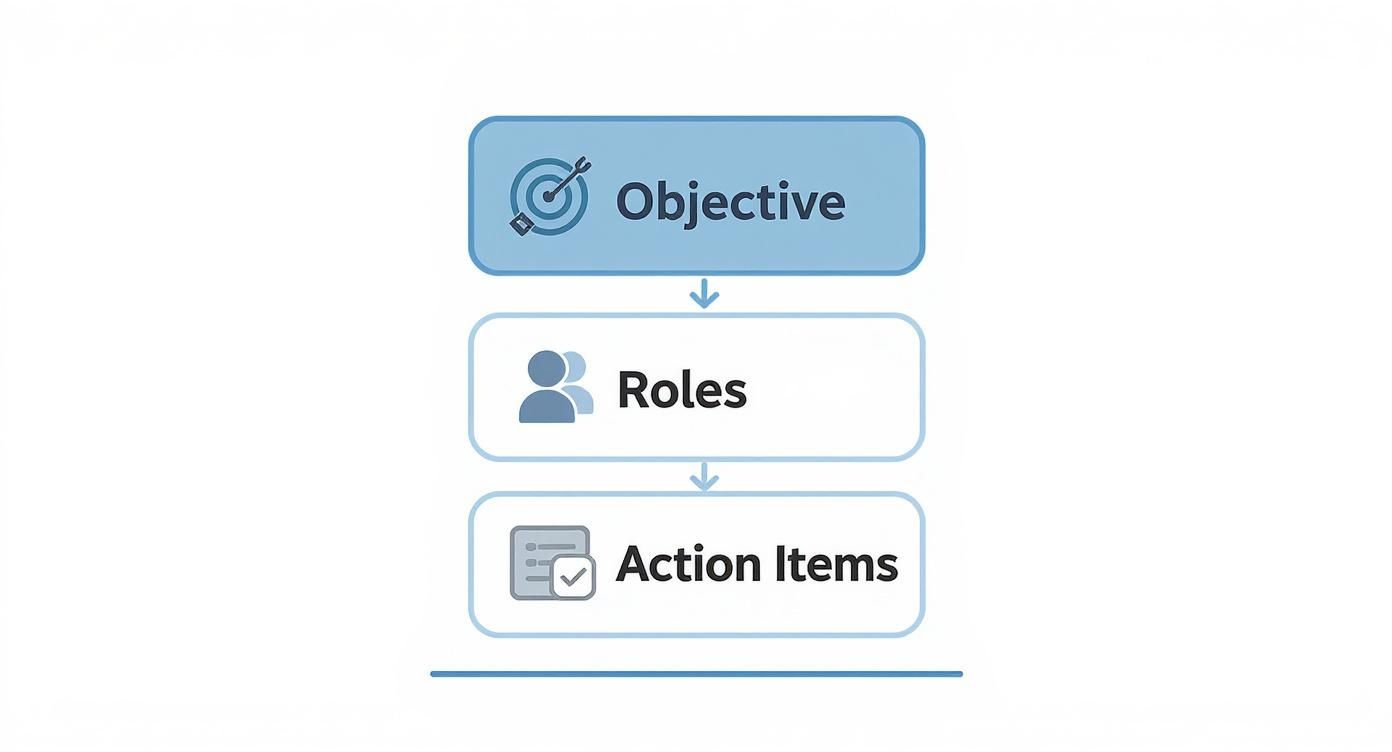
It’s a great visual reminder that no matter the meeting type, a clear objective, defined roles, and a focus on action are the foundational pillars of an effective agenda.
Adapting for Weekly Syncs and Stakeholder Reviews
Once a project is in motion, the purpose of your meetings shifts, and your agenda needs to shift right along with it. A weekly sync has a totally different rhythm and goal than a kickoff.
The weekly sync is the project's heartbeat. It's not about big-picture strategy; it's about momentum, problem-solving, and keeping the team connected and moving forward.
For these recurring meetings, your agenda should be tactical and forward-looking. The focus here is on progress and immediate hurdles. A solid weekly sync template often looks something like this:
- Review of Previous Action Items (5 min): Start with accountability. Did we do what we said we’d do?
- Progress Updates by Team/Individual (15 min): Keep this section snappy and focused on outcomes, not just activities.
- Roadblock Discussion (10 min): This is the most important part of the meeting. Make space for people to raise issues so the team can actually solve them together.
- Upcoming Priorities and New Action Items (10 min): End with clarity. Everyone should know exactly what they need to achieve before the next sync.
On the other hand, a stakeholder review is more of a presentation than a working session. Here, the agenda must be crafted to demonstrate progress, manage expectations, and gather high-level feedback. You'll want to include a project health summary (budget, timeline, risks), showcase major milestone achievements, and have a formal section for stakeholder questions.
The table below breaks down how you can adapt your core agenda for some of the most common meeting types you'll encounter as a project manager.
Template Customization for Key Meeting Types
| Meeting Type | Key Agenda Focus | Must-Have Sections | Example Time Allocation (60 min) |
|---|---|---|---|
| Project Kickoff | Vision, Alignment, and Scope Definition | Project Vision & Goals, Scope/Deliverables, Roles & Responsibilities, Q&A | 20 min Scope, 15 min Vision, 10 min Roles, 15 min Q&A |
| Weekly Team Sync | Progress, Blockers, and Next Steps | Action Item Review, Progress Updates, Roadblock Discussion, New Priorities | 5 min Review, 25 min Progress & Blockers, 10 min Priorities |
| Stakeholder Review | Progress Reporting and Feedback | Executive Summary, Milestone Achievements, Budget/Timeline Update, Feedback | 10 min Summary, 25 min Demo/Achievements, 25 min Feedback/Q&A |
| Project Retrospective | Learning and Process Improvement | What Went Well?, What Didn't Go Well?, Actionable Improvements | 15 min Wins, 20 min Challenges, 25 min Action Plan |
Ultimately, customizing your project management meeting agenda template ensures that every single conversation is relevant, focused, and actively pushing the project closer to the finish line.
Advanced Agendas for High-Stakes Projects
When you’re steering a single project, your trusty weekly agenda usually gets the job done. But what happens when you’re managing a massive program or a whole portfolio of interconnected projects? That simple template just isn't going to cut it. High-stakes meetings demand a much more strategic approach.
These are the meetings where the big decisions get made. We're talking budget approvals, resource allocation across multiple teams, and sometimes, a complete shift in strategic direction. A basic agenda simply can't handle that kind of weight. You need a structure that gives you a bird's-eye view without losing track of the crucial details on the ground.
A portfolio review, for example, isn’t just a roll call of individual project statuses. It’s about understanding how all the moving parts fit together. Your agenda needs to drive conversations about cross-project dependencies, potential resource bottlenecks, and the overall health of the entire portfolio.
Structuring a Portfolio Review Agenda
A great portfolio review lives and dies by its agenda. The real goal is to get a clear, honest picture of where everything stands so you can make smart, informed decisions. This means balancing high-level strategic oversight with just enough detail to be meaningful, which requires a few specific components.
These meetings always need to document who’s there, but they also must have dedicated time to integrate lessons learned from recently closed projects. More importantly, they focus heavily on upcoming decisions and untangling resource conflicts. It’s the very backbone of effective project governance. You can discover more insights about managing project portfolios on theprojectgroup.com to see how others are tackling this.
So, what does this look like in practice? Here’s a sample breakdown:
- Portfolio Health Dashboard Review (15 min): Kick things off with the 30,000-foot view. A visual dashboard is perfect here. You can quickly hit key metrics like overall budget burn, resource utilization, and milestone progress across the board.
- Deep Dive on At-Risk Projects (20 min): Don't waste time on projects that are humming along. Pinpoint the 1-2 projects flagged as red or yellow and focus the entire discussion there. This is your chance to tackle major roadblocks head-on with the right people in the room.
- Resource Allocation and Conflict Resolution (15 min): This is often where the toughest conversations happen. Is the design team a bottleneck for three different projects at once? Use this time to have an honest discussion, prioritize, and reallocate people where they're needed most.
- New Project Proposals and Approvals (10 min): Quickly run through any new initiatives competing for resources. Based on strategic fit and current team capacity, make the go/no-go calls.
Facilitating Tough Conversations
Let's be honest: high-stakes meetings can get tense. When you’re talking about pulling funding from one project to save another or telling someone their pet initiative has to wait, emotions can run high. Your agenda is your best friend for keeping these conversations productive and focused on facts.
By framing a discussion around objective data - like resource capacity reports or risk assessments - you move the conversation away from personal opinions and toward collaborative problem-solving. It depersonalizes the conflict.
When a major risk pops up, for instance, the agenda should guide the team toward finding a solution, not pointing fingers. To get a better handle on this, check out our guide on project risk management examples for ideas on how to frame these discussions.
Ultimately, this transforms your project management meeting agenda template from a simple schedule into a powerful tool for navigating complexity and keeping your most important work on track.
Putting Your Agenda Template into Practice
https://www.youtube.com/embed/0PQLEyFEgag
So, you've designed the perfect meeting agenda template. That's a huge first step, but a template sitting in a folder doesn't get you very far. The real magic happens when you weave it into your team's daily rhythm, turning it from a simple document into a powerhouse for focus and accountability.
Your work starts well before anyone even enters the meeting room. Get that agenda sent out at least 24 hours in advance. This isn't just a courtesy; it's a critical part of running an effective meeting. It gives everyone a chance to prepare their updates, pull the right data, and really think about the discussion points. People showing up prepared is the difference between a sluggish status update and a dynamic problem-solving session.
During the Meeting Itself
Once the meeting kicks off, that agenda is your roadmap. As the facilitator, it's your job to keep everyone on track and on time. When conversations inevitably start to drift - and they will - you can use the agenda to gently pull everyone back to the main point.
We’ve all been there. A quick 10-minute budget review somehow turns into a 25-minute debate about a new software tool. That’s your cue to step in. A simple, "This is a great conversation, but let's add it to the 'parking lot' for now and circle back to the budget," works wonders. It keeps the meeting moving without dismissing good ideas.
Your agenda is your best defense against scope creep inside the meeting. It empowers you to redirect conversations and make sure every important topic actually gets the time it needs.
Sticking to the agenda builds discipline. Over time, your team will learn to be more concise and prepared because they know the structure will be respected. This means you cover everything you need to without going over time - something everyone on the team will appreciate.
After the Meeting Ends
Don't close your laptop just yet. What happens after the meeting is just as important as what happened during it. All those great decisions and brilliant ideas can vanish into thin air without a solid follow-up plan.
Your post-meeting summary should be a mirror image of your agenda. Send out meeting minutes structured around the same topics you just discussed. This creates a clear, easy-to-follow record.
- Summarize Key Decisions: For each agenda item, jot down the final call that was made. No fluff, just the outcome.
- List Action Items Clearly: Every single task needs an owner and a deadline. No exceptions.
- Link Back to Goals: Briefly connect the meeting's outcomes to the project's bigger objectives to keep the "why" front and center.
This process closes the accountability loop. The minutes from today's meeting become the starting point for the next one, where you'll review those same action items. It's this consistent rhythm that stops things from falling through the cracks. It also feeds perfectly into your wider reporting, like the kind we cover in our guide to building a project status report template. By linking your agenda, your meeting, and your follow-up, you create a system that drives real, tangible progress.
Got Questions About Your Meeting Agenda? Let's Troubleshoot.
Even the most well-crafted meeting agenda template can't solve every problem. In the real world, things get messy. Let's walk through a few common hurdles I've seen teams stumble over and talk about how to clear them. Think of these as the pro-tips that turn a good agenda into a great meeting.
One of the biggest culprits derailing a meeting? Scope creep during the meeting. A conversation veers off-topic, and suddenly you're deep in the weeds on something that wasn't planned. It happens.
When a discussion starts to drift, the facilitator needs to step in. You don’t have to shut it down abruptly. A simple, "That's a great point, but it's a bit off our current topic. Let's put that in the 'parking lot' and make sure we circle back to it later," is all it takes. This simple trick acknowledges the contribution without sacrificing the meeting's focus. It's about respecting the idea and everyone else's time.
How Do You Handle Stakeholders with Their Own Agendas?
Here’s a tricky one: managing stakeholders who aren't part of the core team. They might join a meeting with their own priorities, ready to push for new features or question the project's entire direction. This is where your agenda becomes your best line of defense.
By sending the agenda out well in advance, you give everyone a clear picture of what the meeting is for - and what it's not for. If a stakeholder wants to add something, they have the opportunity to bring it up beforehand. This prevents an ambush of new requests and keeps the conversation centered on the project's immediate goals.
An agenda sets professional boundaries. It quietly communicates that the meeting has a clear purpose and that everyone’s time will be respected, which is a powerful way to manage expectations without confrontation.
This simple, proactive step keeps your meeting on the rails and productive for the people who need to be there.
What About Agendas for Hybrid or Remote Teams?
Running meetings with a mix of in-person and remote folks adds another layer of complexity. Keeping everyone engaged when they aren't in the same room is a huge challenge. A static, one-way agenda just won't cut it.
Your project management meeting agenda template needs to be adapted for a distributed team. The key is to build in moments for interaction.
- Bring in the Tools: Don't just list a topic. Link out to a Miro board or a shared Google Doc where people can contribute their thoughts live.
- Share the Spotlight: Avoid having one person talk for the entire meeting. Assign different agenda items to different people. This immediately boosts engagement because everyone knows they have a part to play.
- Plan for Pauses: For any meeting over an hour, literally schedule a 5-minute bio-break into the agenda. It gives remote team members a much-needed chance to step away from the screen and helps everyone stay sharp.