
Digital Transformation for Small Businesses: Practical Guide
Let's cut through the jargon. For a small business, digital transformation isn't some complex corporate overhaul. It's really about finding smart ways to use today's technology to work smarter, not just harder.
Imagine a local coffee shop. They used to track orders with a pen and a paper pad. Now, they use a simple tablet app. Suddenly, orders are faster, mistakes are down, and they can instantly see that their caramel latte is the top seller. That's digital transformation in a nutshell - small, practical changes that make a big difference.
What Does Digital Transformation Really Mean for Your Business?

At its heart, digital transformation is a mindset shift. It's about looking at how you run your business - from marketing to customer service to paying invoices - and asking, "Is there a better, tech-driven way to do this?"
This isn't about launching a massive, expensive project that requires a team of IT experts. It’s about moving away from manual, time-consuming tasks and embracing more efficient, automated, and data-backed methods. You’re not rebuilding your business from the ground up; you’re simply solving one problem at a time with the right tool.
A Practical Path to Modernizing
The goal is to zero in on the areas where technology can give you the biggest bang for your buck. Maybe it’s automating those repetitive admin tasks that eat up your day, or perhaps it's using a simple CRM to keep track of customer conversations and build stronger relationships.
A recent survey from Small Business Majority found that 52% of small business owners believe digital tools and AI will help them streamline their work and cut down on manual effort. This shows the focus is on practical, tangible benefits.
You could introduce tools that help with:
- A Better Customer Experience: Think online booking systems that let customers schedule appointments 24/7 or a simple chatbot to answer common questions on your website.
- A More Productive Team: Project management software can keep everyone on the same page, ensuring deadlines are met without constant check-ins.
- Smoother Operations: Automating your invoicing process means you spend less time chasing payments and more time running your business. Curious how that works? Check out our guide on what is workflow automation.
By tackling your most pressing bottlenecks first, you create a solid foundation for growth. This ensures every tech investment you make is directly tied to a real business goal.
It All Starts with Small, Smart Steps
Ultimately, this is about leveling the playing field. The right technology gives you the power to be more agile, responsive, and efficient - letting you compete with much larger companies without a huge budget.
It’s not about having the flashiest new software. It's about choosing user-friendly tools that solve your specific problems.
This guide is here to show you that digital transformation for small businesses is within reach. It's a series of manageable changes that add up to a stronger, more resilient business. You can start small, see the results, and build momentum from there.
The Real-World Benefits of Going Digital
Let's get straight to the point: adopting new technology isn't just about looking modern. It’s about getting real results that you can see in your daily work and, more importantly, in your bank account. When a small business decides to truly embrace digital tools, it starts a chain reaction that improves everything from how happy your customers are to how much your team gets done.
The shift is huge, and it’s happening everywhere. Worldwide spending on this kind of transformation is expected to reach an incredible $3.9 trillion by 2027. Businesses, big and small, are catching on. For smaller companies, this often means investing in things like cloud services, online stores, and digital marketing - tools that let them punch well above their weight.
Just look at the numbers. A massive 95% of European companies say that moving to the cloud has lowered their IT bills and made their teams more productive, especially in sales and customer service. Let's dig into the specific areas where you'll see the biggest wins.
Create Happier and More Loyal Customers
In this day and age, a fantastic product isn't always enough. The experience a customer has with your business is what really makes you stand out. Digital tools are your secret weapon for building stronger, more personal connections with the people who support you.
Think about it. A customer has a question at 10 PM. Instead of waiting for you to get into the office the next morning, they get an instant answer from a chatbot on your site. That's the magic of a Customer Relationship Management (CRM) system like HubSpot or Zoho. It helps you keep track of every conversation, personalize your follow-ups, and make sure no one ever feels ignored.
- Faster Service: Online booking tools let customers schedule appointments whenever it's convenient for them, even in the middle of the night.
- Personalized Communication: Email marketing platforms allow you to send special offers to your most loyal customers, making them feel seen and valued.
- Proactive Support: When you can see a customer's history, you can spot potential issues and solve them before they even become problems. That's how you turn a good experience into a legendary one.
Digital tools change customer service from a chore you have to do into a strategy you get to build. You stop just putting out fires and start building a real community around your brand.
Boost Your Team’s Efficiency and Focus
One of the first things you'll notice after going digital is that your team suddenly has more time. So many hours get eaten up by boring, repetitive tasks that a simple piece of software could handle in seconds.
Just imagine all the time spent manually creating invoices, updating spreadsheets, or chasing down late payments. Automation can take care of all of that, freeing up your team to focus on what humans do best: thinking strategically, building relationships, and growing the business. This isn't just about getting more done; it's about making work more interesting and rewarding for your employees.
By smoothing out your day-to-day operations with tools like Asana or Trello, you create a workplace where things just flow. Everyone knows what they need to do, progress is easy to track, and confusion becomes a thing of the past.
Unlock New and Exciting Revenue Streams
Here's the part every business owner loves: making more money. Going digital opens up a world of new ways to reach customers and sell what you offer. Today, having a solid online presence isn't just a nice-to-have; it's essential for growth.
An e-commerce site, for instance, can turn a local shop into a national brand, letting an artisan sell their creations to people thousands of miles away. A business consultant can package their expertise into online courses, creating income that isn't tied to their time. This is a core part of learning how to increase revenue for your small business in a smart, scalable way.
These aren't massive, budget-breaking changes. They are small, smart investments in technology that can completely reshape what's possible for your business's future.
To wrap it all up, here’s a quick look at how these benefits play out across different parts of your business.
Key Benefits of Digital Transformation for SMBs
| Business Area | Digital Transformation Benefit | Example Tool or Strategy |
|---|---|---|
| Customer Service | 24/7 support & personalization | AI-powered chatbot, CRM system |
| Marketing & Sales | Wider reach & targeted ads | Social media marketing, SEO |
| Operations | Automated repetitive tasks | Invoicing software, project management tools |
| Finance | Real-time financial insights | Cloud accounting (e.g., QuickBooks) |
| Team Productivity | Centralized communication | Collaboration platforms (e.g., Slack) |
These examples just scratch the surface, but they show how a few strategic digital upgrades can have a powerful and positive impact on every corner of your company.
Your Simple Digital Transformation Roadmap
Jumping into digital transformation can feel like planning a cross-country road trip without a map. You know your destination - more efficiency, happier customers, and growth - but the sheer number of possible routes is overwhelming. The secret is to start with a clear, simple plan that focuses on one stop at a time.
Think of this roadmap as your guide. It breaks the entire journey into four manageable stages, helping you make real changes without getting bogged down in technical jargon or blowing your budget. This is a flexible blueprint, not a rigid set of rules, designed to help you start small and build momentum.
Stage 1: Pinpoint Your Biggest Challenge
Before you even glance at a single piece of software, take a hard look at your daily operations. Where are the biggest bottlenecks? What tasks consistently eat up the most time or cause the most headaches for you, your team, or your customers?
A World Economic Forum report found that while one in four small businesses see tech implementation as a major challenge, two-thirds are more focused on just surviving and growing. This tells us that your digital journey should start by solving today's most urgent problems, not by chasing futuristic ideas.
- Is your team spending hours on manual invoicing when they could be chasing leads?
- Are you losing customers because your booking process is a nightmare?
- Do customer conversations get lost in the shuffle, leading to missed follow-ups?
Find that one "pain point" that, if you solved it, would make the biggest positive difference in your business. This initial focus is everything.
Stage 2: Set a Clear and Achievable Goal
Once you've zeroed in on your main challenge, you need to define what "fixed" actually looks like. A vague goal like "improve customer service" won't get you anywhere. Instead, set a specific, measurable target that directly addresses the problem you identified.
For example:
- If slow invoicing is the problem: Your goal could be to cut the time spent creating and sending invoices by 50% in the next three months.
- If no-shows are hurting you: Your goal might be to decrease missed appointments by 25% by using an automated reminder system.
- If customer data is chaotic: Your goal could be to have every single customer interaction logged in one central place by the end of the month.
Having a clear goal turns "digital transformation" from a fuzzy concept into a real project with a finish line. It’s the only way to know if your investment of time and money is actually paying off.
Stage 3: Choose the Right Tool for the Job
Now that you have a specific problem and a clear goal, you can finally start looking for the right technology. The market is flooded with powerful tools, but your job is to find a solution that’s easy to use, fits your budget, and is perfectly built to solve your specific challenge. Don't get distracted by shiny software with a hundred features you’ll never touch.
This infographic breaks down the core benefits you should be looking for - happier customers, smoother operations, and new ways to make money.
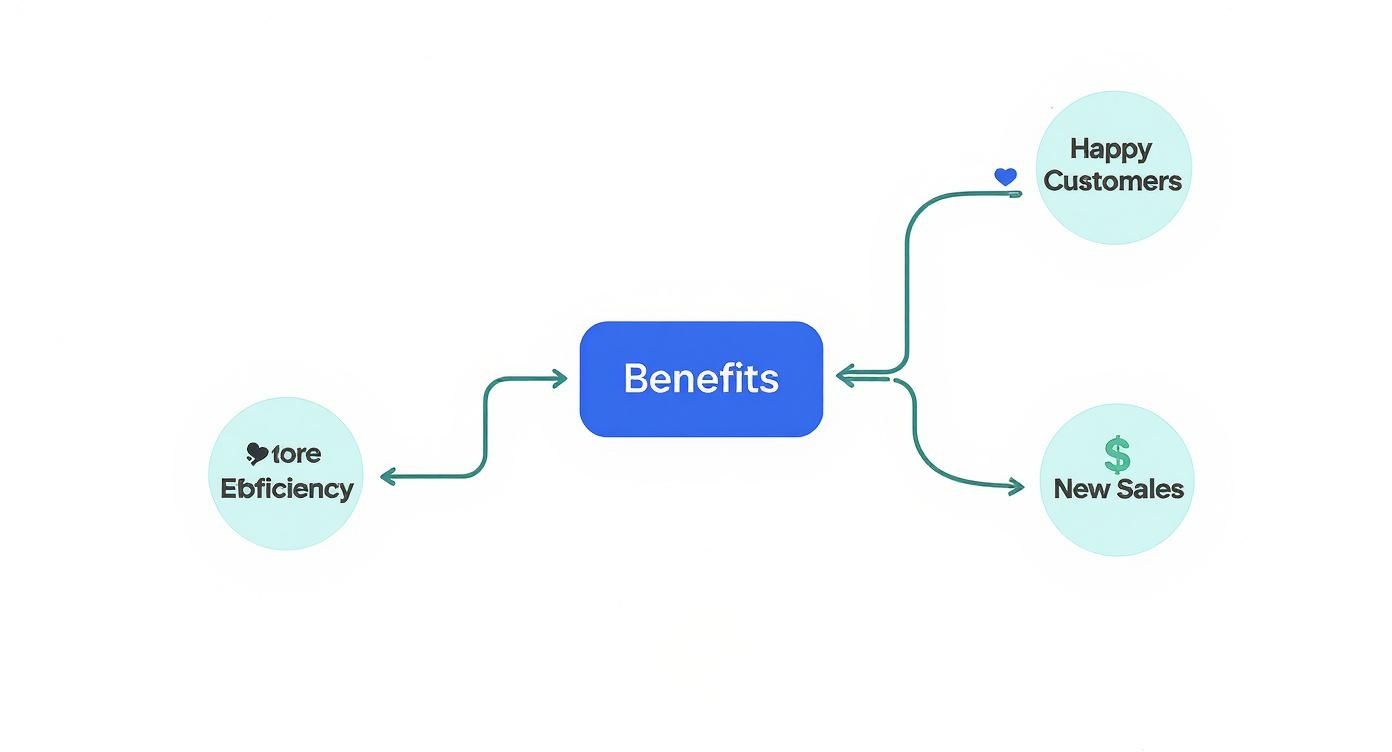
As the graphic shows, any tool you pick should ultimately push one of these critical business outcomes forward.
When you're comparing options, just ask yourself these three simple questions:
- Can we actually use this? Your team should be able to get the hang of it without needing a week-long training course.
- Can we afford it? Many great tools have free or low-cost plans perfect for small businesses.
- Does it fix our problem? Stay laser-focused on your goal and ignore the feature bloat.
Look for platforms that can grow with you. An all-in-one tool like Widgetly, for instance, lets you start by fixing one thing, like project management, and then easily expand to other areas as your business evolves.
Stage 4: Implement, Train, and Iterate
Picking the tool is just the starting line. The final and most important stage is putting it into action, getting your team on board, and constantly making small improvements. A smooth rollout is all about clear communication and being willing to listen.
Start by documenting the new way of doing things. Creating simple guidelines ensures everyone uses the new tool the same way. You can learn more about this in our guide on how to create standard operating procedures, which makes this step much easier.
Your game plan should include:
- A small pilot test: Try the new tool with just one or two people first to iron out any wrinkles.
- Quick training sessions: Don't just show them how to use it; show them how it makes their job easier. Focus on the "what's in it for me."
- An open feedback loop: Actively ask your team what's working and what isn't. Use their real-world feedback to tweak the process.
This cycle - implement, get feedback, and refine - is the true heart of a successful digital transformation for small businesses. It allows you to adapt on the fly and ensures the tech truly serves your business, turning that first small step into a giant leap forward.
Essential Tech Tools for Small Business Growth

Jumping into digital tools doesn't mean you need a massive software budget or a bunch of complicated enterprise-level systems. The trick is to pick a few key tools that solve your biggest headaches and give you the best bang for your buck.
Think of this list as the starter kit for your digital transformation for small businesses. Each category tackles a core part of your day-to-day operations, from keeping customer info straight to making sure your team is working in sync.
Cloud Computing for Ultimate Flexibility
The first and most important piece of the puzzle is the cloud. The easiest way to think about it is like a digital filing cabinet you can get to from anywhere, at any time, on any device. Instead of locking important documents away on a single computer in your office, you store them securely online.
This one simple change is a game-changer. It unlocks the ability for you and your team to work from anywhere, protects your precious data if a computer crashes, and makes working together a breeze.
- What it does: Gives you secure, on-the-go storage for your files and runs the web-based apps you use every day.
- Popular options: Google Drive, Dropbox, and Microsoft OneDrive all have great free plans with affordable upgrades.
- How Widgetly helps: Widgetly fits right into cloud-based platforms like Notion, helping you create powerful, shared workspaces that aren't stuck in one physical location.
Customer Relationship Management (CRM) Systems
A good CRM is like having a perfect memory for your business. It’s one central place where you can keep track of every conversation and interaction with every single customer - every email, call, and sale. It’s what helps you build real, personal relationships.
Instead of digging through old emails or trying to remember who said what, you have their entire history right in front of you. This helps you give amazing service, spot new sales opportunities, and make your customers feel like you actually know them.
A CRM transforms your customer data from a scattered mess of notes and emails into an organized, actionable asset that drives loyalty and growth.
SEO and Digital Marketing Tools
You could have the best product or service on the planet, but if people can't find you online, it doesn't matter. This is where SEO (Search Engine Optimization) and digital marketing tools come into play. Think of them as your megaphone for reaching a much wider audience.
These tools help you figure out what potential customers are searching for, manage your social media posts, and run ad campaigns that actually work. They arm you with the data you need to make smart marketing decisions instead of just guessing.
Getting on board with these tools is becoming standard practice. For example, 26% of small businesses in the U.S. already use e-commerce to connect with customers online. It’s a clear sign that businesses are using digital channels to grow, and you can find more stats on this trend over at Walkme.com.
E-Commerce Platforms
If you sell anything - whether it's a physical product or a service - an e-commerce platform is an absolute must-have. These tools make it surprisingly easy to set up a professional-looking online store, track your inventory, and take payments securely. Best of all, you don't need to be a coding wizard to do it.
An online store opens your business up to the world, letting you sell to people well beyond your neighborhood, 24/7. It's one of the fastest and most direct ways to see a real financial payoff from going digital.
- What they do: Let you build and run an online shop to sell your products or services.
- Popular options: Shopify, Squarespace, and WooCommerce are fantastic, user-friendly choices designed for small businesses.
- How Widgetly helps: You can pop Widgetly's payment widgets right onto your website or Notion pages to sell digital products or services, creating a simple but powerful sales solution.
Project Management and Collaboration Apps
As your business picks up steam, keeping everyone on the same page can feel like herding cats. Project management tools act as a central command center for your team, letting you assign tasks, set deadlines, and see who's working on what.
These apps cut down on the confusing email chains and endless back-and-forth, making sure nothing important gets missed. They create a clear, efficient workflow so your team can spend less time coordinating and more time doing great work. With a tool like Widgetly, you can even embed project trackers and to-do lists into your shared workspaces to make collaboration even more seamless.
Of course, here is the rewritten section with a more natural, human-written tone.
What to Do When Digital Transformation Gets Tough
Let's be real: making big changes in your business is never a perfectly smooth ride. Hitting a few bumps on the road to digital transformation is completely normal. The trick isn't avoiding challenges altogether - it's knowing what they are ahead of time so you can sidestep them without losing momentum.
For most small businesses, the big three hurdles are always the same: tight budgets, feeling overwhelmed by the tech, and getting the team to actually use the new tools. But here’s the good news: none of these are showstoppers. With a smart approach, you can handle each one.
Making It Work on a Small Budget
The fear of high costs is probably the number one reason small businesses hesitate. When you hear "digital transformation," it's easy to picture eye-watering software bills. But you don't need a massive budget to make a real difference. It’s all about being strategic.
Start by focusing your money where it will give you the biggest, fastest win. Instead of trying to upgrade everything at once, just solve your single most nagging problem first.
- Look for Free and "Freemium" Tools: You'd be surprised how many great platforms have powerful free plans. Think about using Google Drive for shared documents or the free version of a project management app.
- Prioritize a High-Impact Solution: Find one affordable tool that automates a task that drains your time, like sending invoices or scheduling appointments. The time you get back is money in the bank.
- Think About the Return: Does a $30 a month subscription feel like a lot? Not if it saves you five hours of busywork every single week. Frame the cost as an investment, not just another expense.
It's not about buying the fanciest software on the market. It's about finding the smartest solution for your business. Low-cost tools that save you time or open up new opportunities often pay for themselves almost immediately.
Building Your Tech Confidence
"I'm just not a tech person." Does that sound familiar? Many business owners worry they don't have the skills to implement new systems, but you don't need to be a coding whiz to make this work. Most modern software is built for the rest of us - it’s intuitive and often requires zero technical expertise.
The goal is to pick tools that feel easy to use from the start and give your team the support they need to feel comfortable.
- Pick User-Friendly Software: When you're trying a tool, see if you can figure out the basics in 15 minutes. If it feels like you need an engineering degree to navigate it, move on.
- Lean on Free Training: Nearly every software company provides a library of free video tutorials, webinars, and help guides. They want you to succeed, so use these resources!
- Learn One Thing at a Time: Don't try to become an expert overnight. Master one core feature of a new tool before you even think about the advanced stuff. This builds confidence and keeps you from feeling overwhelmed.
Getting Your Team On Board
Here's the hard truth: the best tool in the world is useless if no one uses it. People are naturally a bit resistant to change, so you have to handle the transition with a human touch. The key is to show them how the new technology is a helper, not a threat.
Frame it as a way to make their jobs better. Show them how it gets rid of boring, repetitive tasks and frees them up to work on more engaging projects. Even better, get them involved in picking the tool. When people have a say in the decision, they feel a sense of ownership and are far more likely to embrace it.
This isn't just theory - small businesses everywhere are making it happen. From April 2020 to December 2022, investment in digital tools by the smallest firms actually doubled from 10% to 20%. They were pushed to adapt, and they rose to the occasion. You can dig into the numbers yourself in the World Bank's detailed report on small business trends.
How Widgetly Simplifies Your Digital Journey
Knowing the steps for a digital overhaul is great, but you still need the right tools to actually get it done. This is where the rubber meets the road, and where a platform built for small businesses like Widgetly can make a world of difference. Think of it as your launchpad, turning big ideas about digital transformation for small businesses into simple, daily actions.
Instead of trying to glue together a dozen different apps, Widgetly brings everything you need into one spot. This all-in-one approach is designed to cut through the complexity and high costs that so often stop small businesses in their tracks. You can manage your projects, keep an eye on your time, and even take payments - all without constantly switching tabs.
An Intuitive Platform Built for You
Let's be honest: not everyone is a tech wizard. We get it. That's why Widgetly was built from the ground up to be simple, with a no-code foundation. You can drop powerful features like a professional dashboard or a payment button right into your Notion pages with a quick copy-and-paste.
You don't need to hire a developer or lose weeks to training. It’s designed to be so intuitive that you can start solving real problems and seeing results from day one.
Widgetly is all about making the move to digital feel less like a chore and more like an achievement. It gets the tech out of the way so you can focus on what you do best: running your business.
Affordable Tools That Grow with Your Business
Money matters. Small business budgets are tight, and every penny counts. Widgetly’s pricing is built to be flexible and affordable, so it works with your bottom line, not against it. You only pay for what you actually use, and you can easily add new features as you grow.
This approach means you'll always see a real return on your investment, whether that's in time saved, better organization, or more sales. It makes the whole process feel sustainable.
By making technology simple and tying it directly to your goals, Widgetly helps you build real momentum. It gives you the essentials to manage customer relationships, fine-tune your operations, and spark growth, making your digital journey not just possible, but successful.
Frequently Asked Questions
When you're first thinking about taking your business digital, a few common questions always seem to pop up. Let's tackle them head-on so you can move forward with confidence.
How Do I Know Where to Start My Digital Transformation?
The best way to start is to look for your biggest headache. Forget about overhauling your entire company overnight. Instead, pinpoint that one recurring problem that eats up the most time or causes the most frustration.
Is it the hours you spend manually tracking sales in a spreadsheet? Maybe it's the constant phone tag trying to schedule appointments. Whatever that one thing is, start there.
By focusing on your most significant pain point first, you guarantee your initial effort makes a real, immediate difference. This creates momentum and shows everyone the value of digital transformation for small businesses right out of the gate.
Is This Going to Be Expensive?
That’s a common myth, but the answer is: not necessarily. The idea that you need a massive budget to go digital just isn't true anymore. Many of the best tools for small businesses offer powerful free versions or incredibly affordable starter plans.
The trick is to stop thinking of these tools as costs and start seeing them as investments.
A $20 per month subscription for an automated invoicing tool might look like another expense. But what if it saves you four hours of mind-numbing admin work every single month? It's already paid for itself many times over.
Look for solutions that give you a clear return on your investment, whether that's saving time, cutting down on errors, or bringing in new customers. That’s how you make it financially sustainable.
How Do I Get My Team to Embrace New Software?
Getting your team on board with change is everything. The secret? Focus on "what's in it for them." You have to show them how a new tool isn't just one more thing to learn, but something that will actually make their jobs easier and less frustrating.
Frame it as a way to get rid of the tedious stuff. A new project management app, for example, means fewer "just checking in" emails and more clarity on who’s handling what.
A great way to get buy-in is to involve a key team member in the decision-making process. If they help pick the tool, they'll become its biggest advocate. From there, a little hands-on training and a lot of encouragement can make the transition a smooth one for the whole team.