
How to Increase Revenue with Proven Strategies
Figuring out how to increase revenue really boils down to a simple, three-part approach. It's about using smart tech to work more efficiently, getting to know what your clients really need, and being nimble enough to roll with market changes. When you get these three things working together, you create a powerful, sustainable engine for growth.
Your Framework for Real Revenue Growth
Every business owner I know wants to boost their bottom line, but lasting growth is about more than just trying out random tactics. Building a resilient, high-growth business starts with a solid foundation. This isn't just theory - it's about adopting a mindset that gets you past small, fleeting wins and helps you create a real blueprint connecting every action back to your revenue goals.
The secret is seeing revenue growth as the result of a well-oiled system, not just a single lucky break. Think of it like a flywheel: technology, client relationships, and market awareness all push each other forward, building momentum that gets stronger over time.
The Core Components of Growth
From what I've seen, the most successful companies masterfully blend three key areas to create their growth engine.
First, they see technology as a primary tool for creating value, not just another expense on the books. Smart tech investments streamline how you operate, cut down on wasted time and resources, and reveal efficiencies that directly pump up your profit margins. By choosing the right tools, you can put repetitive tasks on autopilot, freeing your team to focus on the stuff that actually moves the needle. For a deeper dive on this, check out our guide on how to automate repetitive tasks.
Second, they are absolutely obsessed with their clients. They don't just sell a service; they solve a genuine problem. This means they're constantly listening to feedback, trying to anticipate what's next, and creating experiences that build real loyalty. When you have that deep understanding of your customers, you can spot clear opportunities to upsell or cross-sell in a way that feels genuinely helpful, not salesy.
“An effective brand resonates with consumers. It powers their purchasing decisions and reflects who they are and what they stand for. Yet, competing for consumers’ attention and actually capturing it and retaining it has never been more difficult.”
This flowchart really brings to life how these three pillars - technology, client focus, and adaptability - work in harmony to drive revenue.
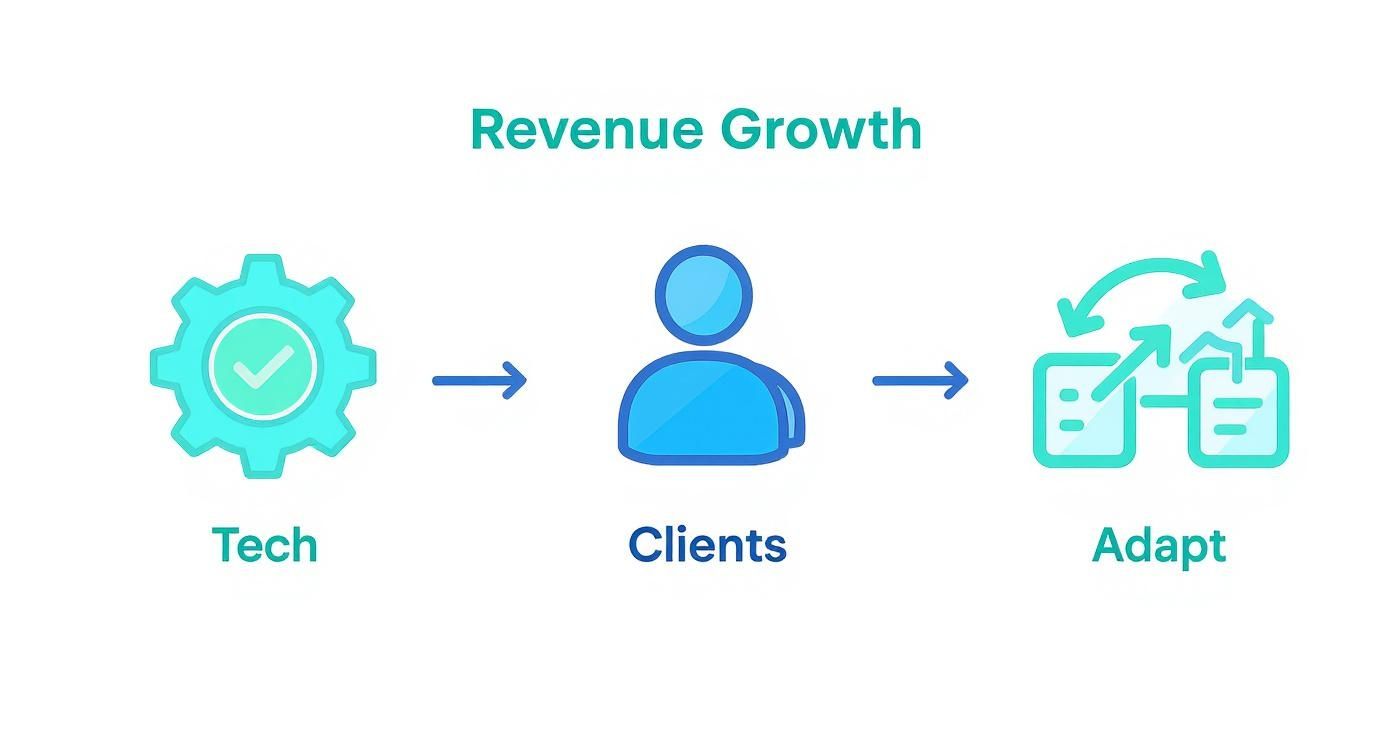
As you can see, each element feeds right into the next, creating a continuous cycle of improvement and growth. It's a powerful loop.
Applying the Framework in the Real World
This isn’t just a nice idea; it's a proven approach that works, even when the economy gets shaky. Just look at major professional services firms. They consistently show that sustained investment in technology and a sharp focus on clients drive revenue, period.
For example, EY reported global revenues of US$53.2 billion for the fiscal year ending June 2025, which was a 4% increase in local currency. This kind of growth, even in tough times, underscores a simple truth: companies that prioritize client-centric transformation and never stop innovating will always have an edge. These revenue findings from their research speak for themselves.
Here's a quick look at how these strategies come together.
Core Revenue Growth Strategies at a Glance
| Strategy | Focus Area | Key Benefit |
|---|---|---|
| Tech-Driven Efficiency | Automating workflows, optimizing processes | Reduces operational costs and frees up team capacity for high-value work. |
| Deep Client Insight | Analyzing usage data, gathering feedback | Uncovers unmet needs, creating clear opportunities for upselling. |
| Market Adaptability | Monitoring trends, staying agile | Allows you to pivot quickly and capitalize on new market opportunities. |
By weaving these three areas into the fabric of your business, you're not just chasing short-term gains; you're building a foundation for long-term, predictable revenue growth.
Turning Technology into a Revenue Driver
It’s easy to look at your tech stack and just see a list of expenses. For a lot of businesses, that’s where the thinking stops, and it becomes a massive roadblock when trying to figure out how to increase revenue.
The most successful companies I've seen do the exact opposite. They don't just see technology as a cost; they see it as their primary engine for making money.
This goes way beyond basic automation. We're talking about weaving tools like advanced analytics and smart widgets deep into your daily operations. The goal is to cut out the fluff, streamline everything, and find efficiencies that put actual money back into your business. When your systems are working for you, your team is free to focus on the creative, strategic work that really moves the needle.
From Cost Center to Profit Center
The whole process starts with a simple change in mindset. Stop asking, "How much is this software going to cost me?" and start asking, "How much revenue can this software help me generate?" That one little switch changes everything.
Think about a freelance graphic designer who uses Widgetly’s project management widgets inside their Notion workspace. At first, they probably just wanted to get organized. But once they dive into the analytics, they can quickly see which projects bring in the most cash for the least amount of time spent.
By making data-driven decisions, the designer can strategically focus on high-value work, effectively turning a simple organizational tool into a powerful revenue-optimization machine.
This isn't just for freelancers, either. An e-commerce store can use analytics to fine-tune its supply chain, cutting down on storage costs and making sure its bestsellers are never out of stock. A consultant can embed payment widgets to make invoicing a breeze, which, as our guide to payment processing for small businesses points out, is crucial for getting paid on time.
Identifying the Right Tech Investments
Let's be real: not all tech is a good investment. The trick is to find tools that solve a specific problem directly linked to your revenue. Before you jump on board with any new platform, you need to ask a few tough questions:
- Will this cut down on manual work? Every hour you save on admin is another hour you can spend on sales, talking to clients, or building your next great product.
- Does it give me insights I can actually use? A mountain of data is worthless. You need tools that translate that data into clear actions, showing you where to upsell or how to fix a bottleneck.
- Will it make things better for my customers? A smooth, easy customer experience almost always leads to more sales and loyal, repeat buyers.
Here’s a practical example. A small agency could build a client portal in Notion using Widgetly’s secure access widgets. This does more than just organize communication; it creates a polished, professional experience that makes it easier to justify charging premium rates.
When you choose technology that directly adds value, every dollar you spend becomes an investment in your company’s future. That’s how you truly master how to increase revenue.
Find Growth in Market Trends and Consumer Shifts
Sometimes, the best ideas for growing your business aren't tucked away in your internal data. They’re happening all around you. Big shifts in the economy, in how people live and work - these are the kinds of changes that can open up massive opportunities for anyone paying close enough attention.
The trick is learning to spot these trends before everyone else does. This isn't about jumping on every new fad. It's about being smart and positioning your business to meet a need that's just starting to surface. When you look beyond your day-to-day operations, you can find some seriously powerful, untapped ways to grow.
Reading the Market Signals
To find these opportunities, you have to know where to look. Think of yourself as a detective, pulling together clues from different places to see the bigger picture.
Take the global commercial real estate market, for example. It’s a perfect case study of how demographic trends create huge revenue potential. The industry is projected to hit US$5.6 trillion in revenue by 2025, largely because a housing shortfall in major economies has pushed more and more young people into renting. This shift created a boom in demand for multifamily housing. The companies that saw this coming and invested early in build-to-rent projects did incredibly well. It’s a great lesson in how anticipating consumer behavior can really pay off. You can dig into more of these global trends over at ibisworld.com.
This same thinking applies to any business, no matter the size. You can start by asking a few simple questions:
- What’s buzzing online? Keep an eye on social media, forums, and communities in your space. Are people repeatedly complaining about the same problem or wishing for a new solution?
- How is the workday changing? The explosion of remote work created new markets for everything from home office gear to productivity tools like the ones we offer at Widgetly.
- What’s on my customers’ minds financially? Are they trying to cut costs, or are they more willing to invest in things that save them time and offer better quality?
The real skill isn't just collecting information; it's connecting the dots. Once you see a pattern forming, you can start thinking about how your business can get ahead of it.
Turning Insight into Action
Spotting a trend is the easy part. Doing something about it is what counts. After you’ve identified a potential market shift, you need a plan to turn that knowledge into a real strategy. This often means being nimble enough to tweak your products, services, or marketing to match what people are starting to want.
Let's say you're a freelance web developer who uses Widgetly to manage client projects in Notion. You start noticing that more and more small businesses are asking for e-commerce sites with subscription features. It's not just a random request anymore - it's becoming a pattern.
Instead of just building those sites one by one, you could get strategic:
- Create a dedicated package: You could offer a "Subscription Box Starter Kit." This service would include the website build, payment setup, and a custom Notion dashboard - powered by Widgetly widgets - for them to manage subscribers.
- Rethink your marketing: Update your website and social media profiles to position yourself as an expert in building recurring revenue businesses.
- Share your knowledge: Write a blog post or a simple guide titled "How to Launch a Subscription Service." This builds your authority and attracts the right kind of clients.
By getting in front of this consumer shift, you’re no longer just reacting to project requests. You're building a whole new, high-value service that can become a major source of revenue for your business. That's how you go from just keeping up to actually driving growth.
Reinvent Your Business Model for a Digital World
Trying to grow a business with an outdated model is like navigating a modern highway with a horse and buggy. Sure, it worked once, but today it’s a massive liability. If you're serious about finding sustainable ways to increase revenue, you have to meet customers where they are - and that’s online.
This shift isn't just for shiny tech startups. Any business, big or small, can tap into new income streams by thinking digitally. It’s all about creating direct-to-consumer sales channels, building fierce loyalty with personalized experiences, and finding smart ways to monetize your expertise.
Lessons from the Entertainment World
Need a masterclass in this kind of pivot? Just look at the entertainment industry. A decade ago, their business model was fragmented and struggling. Today, it’s a powerhouse built on recurring revenue from streaming and subscriptions.
The numbers are staggering. Entertainment revenues are on track to hit US$2.9 trillion in 2024, which is a 5.5% increase from last year alone. Projections show that figure climbing to a massive US$3.5 trillion by 2029, with streaming, social media, and digital ads leading the charge. You can dig into these industry shifts and their financial impact to get the full story.
The biggest lesson here is their relentless focus on data-driven, direct-to-consumer relationships. So, how can you do the same?
- Move from one-off sales to recurring revenue. Could you turn your service into a monthly subscription? What about a premium membership with exclusive perks?
- Sell directly to your customers. Use online tools to bypass the middlemen. This lets you build a real relationship and keep more of the money you earn.
- Make it personal. Use customer data and feedback to give people exactly what they want. It makes them feel valued and keeps them coming back.
Build Your Digital Revenue Streams
You don't need a Hollywood budget to start building your own digital offerings. With tools like Widgetly and Notion, you can start creating and selling new products almost overnight.
Let's take a real-world example. A fitness coach who usually relies on in-person sessions can easily create a digital product. They could build a client portal in Notion, then use Widgetly’s secure access widgets to sell monthly subscriptions. This could give clients access to workout plans, meal prep guides, and progress trackers.
This digital-first approach doesn't just add a new revenue stream; it fundamentally transforms the business model from one limited by time and location to one that can scale globally.
Creating assets like these is easier than you might think. If you’re not sure where to begin, our guide on how to create digital products breaks down the entire process into simple, actionable steps.
Ultimately, the goal is to build a more resilient business that isn't leaning on a single source of income. By diversifying what you sell and how you sell it, you create a much more stable and profitable foundation for the future.
Find the Hidden Revenue in Your Current Customer Base
We all know chasing new leads is expensive. And while it's a necessary part of growing any business, the fastest and cheapest way to boost your bottom line is often right under your nose. Your existing customers - the ones who already know and trust you - are a goldmine of untapped potential.
The whole game changes when you stop focusing solely on acquisition and start thinking about retention and expansion. It’s all about building deeper relationships, figuring out what your clients really value, and then offering them more of it. This is the secret to sustainable revenue growth.
Build Smarter Pricing and Upsell Tiers
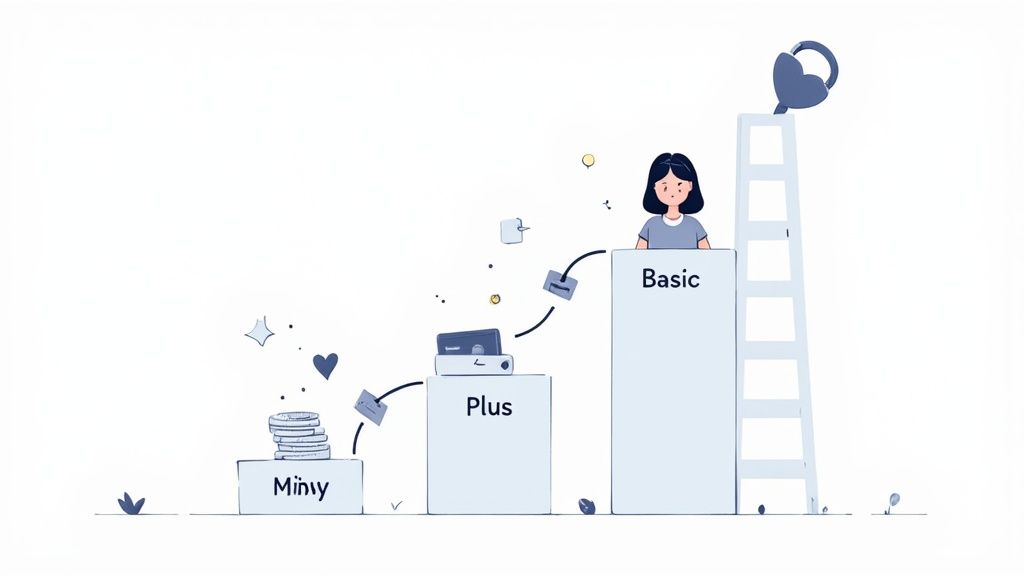
Your pricing should never be a "set it and forget it" affair. As your services get better and you add more value, your pricing needs to keep up. One of the easiest ways to handle this is by creating tiered packages that speak to different customer needs and budgets.
Let's say you're a freelance consultant who manages client projects in Notion. You could use Widgetly’s secure access widgets to build out a premium client portal. Suddenly, you have a brand new, high-value feature that completely justifies a higher-priced tier.
Here’s what that might look like in practice:
- Basic Tier: You deliver the standard project and offer email support.
- Pro Tier: Includes everything in Basic, but adds a dedicated client portal with real-time progress trackers.
- Premium Tier: You get all of the above, plus direct access to embedded analytics dashboards and monthly strategy calls.
This model does more than just raise your average project value. It gives your clients a clear roadmap to upgrade as their own needs grow, making the upsell feel like a helpful next step, not a hard sell.
The Power of Bundling and Cross-Selling
Bundling complementary services is another fantastic play. It's a simple way to increase your average transaction value while giving your customers a convenient, all-in-one solution. You're basically making it easier for them to spend more money with you.
A course creator, for instance, could bundle their main course with a pack of Notion templates powered by Widgetly widgets. They might sell the course alone for $299 and the templates for $99. But offering them together as a bundle for $349 feels like a steal for the customer, and it nets the creator an extra $50 per sale.
When your brand has positive equity, consumers may be less price-sensitive and willing to pay a premium. They may also be more loyal and willing to try new products bearing your brand’s name.
This strategy is effective because it’s all about providing more value. You're not just asking for more money - you're offering a more complete solution to your customer's problem. When you combine a smart pricing structure with thoughtful bundles, you create profitable, long-term relationships that become the foundation of your business.
Answering Your Top Revenue Growth Questions
Even with a solid strategy, the day-to-day work of growing revenue can throw some curveballs. Let's tackle some of the most common questions that pop up for business owners trying to boost their bottom line.
What’s the Fastest Way to Increase Revenue for a Small Business?
For a small business, the quickest wins are almost always hiding in your existing customer base. It might sound too simple, but a modest price increase can have an immediate, direct impact on your cash flow without costing you a dime in marketing.
Another great move is to create simple upsell or cross-sell opportunities right at the point of purchase. Think about a coffee shop. Training your baristas to ask, "Would you like to add one of our fresh-baked pastries to your order?" can seriously lift the average sale amount over time. Focusing on this kind of low-hanging fruit gives you an instant revenue bump while you work on bigger, long-term growth plans.
How Can I Make More Money Without Getting New Customers?
Growing your revenue without a constant hunt for new customers is all about maximizing your customer lifetime value (CLV). Honestly, this is often way more cost-effective than chasing down new leads, and it makes your business much more stable.
Start by taking a hard look at your pricing. Are you really charging what your product or service is worth? So many businesses accidentally undervalue what they offer. Once you've got that sorted, you could introduce tiered packages or a premium version of your service to encourage customers to upgrade.
"If your brand has positive, strong brand equity, consumers may be less price-sensitive and willing to pay a premium. They may also be more loyal and willing to make repeat purchases or try new products bearing your brand’s name."
Here are a few other powerful tactics I've seen work wonders:
- Create Bundles: Package related products or services together. If the bundle offers more value than buying each item separately, it's an easy "yes" for the customer.
- Launch a Loyalty Program: Give people a reason to come back. Rewarding repeat business encourages them to shop more often and spend more over their lifetime.
- Nail the Customer Experience: A smooth, positive experience makes customers want to stick around. It also makes them much more open to hearing about your other offers.
What Key Metrics Should I Track for Revenue Growth?
Total revenue is the big number, of course. But tracking a few specific metrics will give you a much clearer picture of your company's financial health and where it's headed.
Keep a close eye on these key performance indicators (KPIs):
- Average Revenue Per User (ARPU): Is each customer spending more with you over time? This number tells you.
- Customer Lifetime Value (CLV): This is the holy grail. It tells you the total revenue you can expect to earn from a single customer.
- Customer Acquisition Cost (CAC): How much does it cost you to land a new customer? For a healthy business, your CLV needs to be way higher than your CAC.
- Churn Rate: This is the percentage of customers who leave you over a certain period. Lowering churn is one of the most direct ways to protect and grow your revenue.
Should I Lower My Prices to Get More Customers?
Lowering prices can feel like a quick fix, but it's a dangerous game. Sure, you might see a short-term sales spike, but it can cheapen your brand in the long run. You'll also attract customers who only care about the lowest price - they aren't loyal and will disappear as soon as a competitor undercuts you.
A much smarter approach is to focus on increasing the perceived value of what you sell. Instead of just slapping on a discount, think about adding extra features, providing truly exceptional customer service, or creating irresistible product bundles. This strategy lets you hold your ground on price - or even raise it - while making your offer more compelling. That's the path to healthy, sustainable growth.